Exploration of Biodata Format
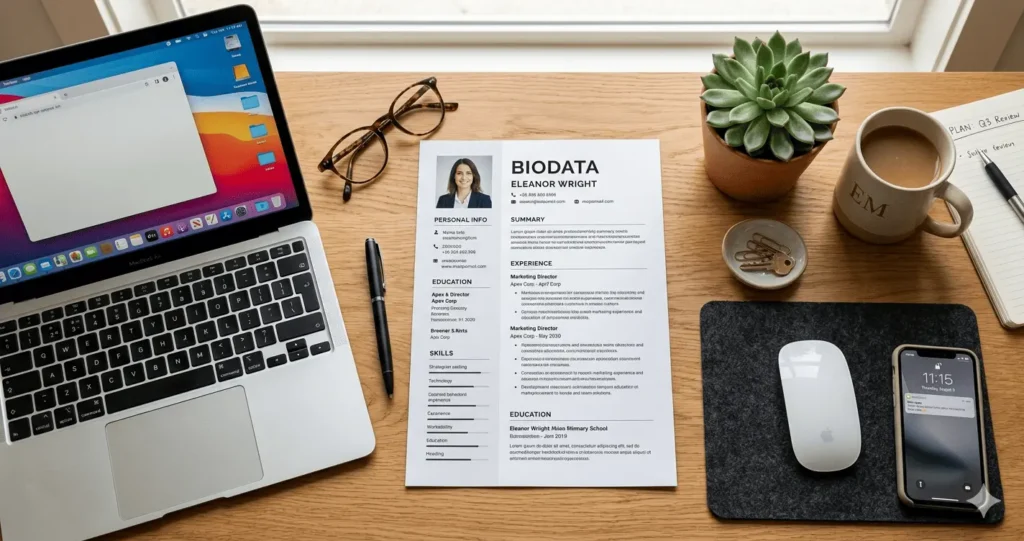
Let’s start simple. Many people think biodata is just a fancy word for a resume. It’s not. A resume is mainly about your work. A biodata is about you, the whole picture. Your name, your background, your family, your education, sometimes even your height or religion. It depends on why you’re making one
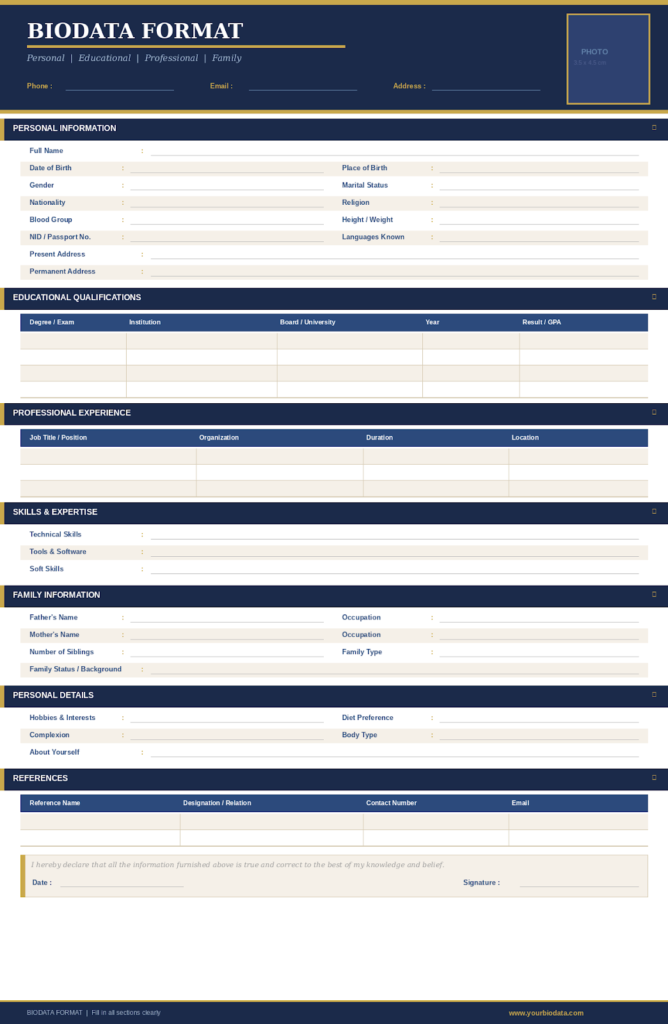
A biodata form covers your personal details, educational background, family information, and sometimes your hobbies, physical attributes, or religious beliefs. The content really depends on what you are using it for, whether that is a job application, a marriage proposal, or something academic.
At Biodatalist.com, we often get asked: why does biodata matter so much? The answer is simple. In countries such as Bangladesh and India, and across South Asia, biodata is a deeply rooted tradition. It is the first thing someone reads before deciding to know you better personally or professionally. Think of it as your personal introduction letter before you even walk into the room.
A basic typed document used to be enough. These days, people expect something clean, organized, and well-presented. With tools like Microsoft Word and Google Docs, creating a biodata has become more accessible. But the competition is growing day by day. Your biodata format needs to stand out, stay honest, and represent you well. That is exactly what Biodatalist.com is here to help you with.
Importance of Having a Best Quality Biodata Format Document
You only get one chance to make a first impression, and in most cases, your biodata is that first impression. Whether you are going for a job interview or being considered for a marriage proposal, the quality of your biodata format can literally open or close doors for you.
A well-made biodata tells it that you are someone who is organized, thoughtful, and serious. It shows you took the time to present yourself clearly and professionally. On the flip side, a messy, incomplete, or poorly designed biodata creates doubt even if you are perfectly suitable for the opportunity.
From a practical angle, a good biodata saves everyone time. When information is laid out clearly and logically, the person reviewing it can quickly get a sense of who you are. That matters a lot when recruiters or families are going through dozens of biodatas at once.
There is also the trust factor. A clean, professional biodata format signals the person behind it. At Biodatalist.com, we always say your biodata is not just a document; it is your personal brand. Make it count. In competitive situations, the biodata that looks polished and complete will always get more attention.
How to Make the Finest Quality Biodata Format
Making a high-quality biodata is not just about filling in some blanks and calling it done. It takes a little planning, some thought, and attention to the details. Here is a simple breakdown to help you get it right:
Know Your Purpose First
- Are you making it for a job application, a marriage proposal, or an academic use?
- Your purpose shapes everything the sections you include to the tone you use.
- Never use the same biodata for every situation.
Gather Your Information Before You Start
- Full name, date of birth, and contact details
- Educational qualifications with institution names and results
- Work experience (if any) and key skills
- Family background and personal details if needed
- Use a clean, readable font.
- Keep proper spacing between sections.
- Use clear section headings so the reader can navigate easily
- At Biodatalist.com, we always recommend simple over fancy.
- Avoid heavy borders, multiple colors, or design elements
Focus on Layout and Design
Photo and Final Checks
- If a photo is required, use a recent and formal one, no casual or vacation photos
- Proofread at least twice before sending
- Ask someone else to review it, too.
- Save as both .docx and .pdf, so it is ready to share anywhere
Why Biodata Format Should Be Clear and Impressive
There is a real difference between a biodata that looks good and one that actually works. You want both, but clarity always comes first.
If the person reading your biodata has to search for your phone number or struggles to find your qualifications, something is already wrong. Everything should be easy to spot and easy to understand. Use clear headings, leave enough space between sections, and never let the page feel cramped or crowded.
Being impressive, It means presenting yourself in a way that feels confident and respectful. A well-structured biodata quietly says: I know what I am doing, and I am serious about this opportunity. That impression made before you have said a single word can genuinely change outcomes.
Biodatalist.com has seen thousands of biodata examples over the years. The ones that consistently get the best results are not the fanciest ones. They are the clearest ones. Simple, well-organized, and honest. That is the combination that works every time.
Here Are Some Important Biodata Formats
Job Biodata Format: This is used when applying for employment, especially government jobs or organizations that specifically ask for a biodata rather than a resume.
Not all biodatas are created equal, and using the wrong format for the wrong situation can actually hurt your chances. Here are the main types you should know about, all of which you can find ready-made templates for at Biodatalist.com:
Marriage Biodata Format: Very common across South Asia. This format is more personal. It includes physical details like height and complexion, family background, religion, hobbies, and what you are looking for in a partner.
Student Biodata Format: Used for academic applications or internships. The focus is on educational achievements, extracurricular activities, and future goals.
Simple Biodata Format: A clean, one-page document covering just the essentials — name, contact, education, and a few personal details. Perfect when you need something quick but still professional.
Each format has its own requirements, but they all share the same rule: be accurate, be complete, and make it easy to read.
Best Biodata Format for Job and Marriage
Job and marriage biodatas are two of the most commonly searched formats on Biodatalist.com, and for good reason. They are the most used, but also the most different from each other. Here is what sets them apart.
For a Job Biodata: Keep it professional and achievement-focused. Lead with your name and contact details, then a short objective statement. Follow with your education and work experience in reverse order, most recent first. Add your skills and references at the end.
For a Marriage Biodata: The tone here is warmer and more personal. Start with a formal photo, then your personal details, name, date of birth, height, religion, and mother tongue. Then move into your education and career, followed by family details and your personal interests. End with what you are genuinely looking for in a partner. Keep it real and respectful.
In both cases, the most important thing is honesty. A biodata that accurately represents who you are will always serve you better than one that exaggerates or leaves out key details.
What to Include and What to Skip for Making a Professional Biodata
One of the most common mistakes people make is either stuffing their biodata with too much unnecessary information or skipping the things that actually matter.
What to Always Include: Your full name, date of birth, current address, phone number, and email. Your educational qualifications with institution names, completion years, and results. Relevant work experience, key skills, languages you speak, and a professional photo if the format needs one.
For a marriage biodata, also include family background, religion, and personal preferences.
What to Leave Out: Anything that does not serve the purpose of the biodata. For job applications, you usually do not need your religion, caste, or physical description unless specifically asked. Avoid vague statements like ‘hardworking and dedicated’ that say nothing concrete. Skip outdated qualifications that no longer reflect where you are now.
Also, leave out heavy decorative designs, casual photos, and anything that is not fully true. At Biodatalist.com, we always remind our users that one false detail discovered later can seriously damage their credibility. Keep it clean, keep it honest.
Challenges to Make the Best Quality Biodata Format
Making a great biodata sounds straightforward — but when most people actually sit down to do it, they run into a few real challenges. Let’s see that:
Structure
- Unclear about how long the document should be
- No single perfect answer — it depends on your background and purpose
- Getting the structure wrong can make even great information hard to digest
Design
- Getting everything to look clean and professional takes real effort
- Fonts, spacing, margins, and alignment all matter more than people think
Keeping It Updated
- Life changes new qualifications, a new job, a new address
- Your biodata should reflect where you are now, not two years ago
Biodatalist.com recommends reviewing and updating your biodata every few months to keep it fresh and accurate
How to Make a Biodata Format in MS Word Step by Step
Microsoft Word is still the most practical and widely used tool for creating a biodata, and you do not need any special design skills to get a great result. Here is a simple step-by-step process:
Step 1: Open MS Word and Start: Go to File, then New. You can search for a biodata or resume template, or start from a blank document if you want full control.
Step 2: Set Up the Page: Go to Layout, then Margins. Set all four sides to 1 inch. Use A4 as your page size. This gives you a clean, standard layout that looks professional.
Step 3: Add Your Name and Contact Details: At the top, type your full name in bold at around 16 to 18pt font size. Just below, add your phone number, email, and city. Center-aligning this section gives it a clean, balanced look.
Step 4: Add Your Photo If Needed: Go to Insert, then Pictures. Upload a formal, passport-style photo. Place it in the top right corner using the text wrapping settings. Make sure the photo is clear and professional-looking.
Step 5: Build Your Sections: Use Word’s built-in Heading styles to create clear sections: Personal Information, Educational Qualifications, Work Experience, Skills, Family Details. This keeps the document organized and easy to scan.
Step 6: Fill in Your Details: Under each heading, add your information using short bullet points or a two-column table layout. Keep sentences factual and to the point.
Step 7: Proofread and Save: Go through everything carefully. Then save your file as both a .docx and a .pdf format so it is ready to share anywhere, anytime. For pre-designed options, visit Biodatalist.com and download a format that suits your needs.
Future Opportunities for Having the Best Quality Biodata Format
The world is moving fast, and biodata is moving with it. More organizations and matrimonial platforms are going fully digital, which means your biodata now needs to look great on a screen, not just on paper. A clean PDF with well-organized content and clear text is the new standard.
At the same time, people are becoming much more aware of personal branding. A biodata that reflects your personality, while staying professional, stands out from the pile. That is why demand for custom biodata templates and design services is growing steadily. Biodatalist.com is at the forefront of that trend, offering a wide range of formats built for different needs and purposes.
Looking ahead, AI tools are beginning to help people build smarter biodatas with formatting suggestions, spell-checking, and even content recommendations. But the human side of it will always matter. No tool can replace your honesty, your self-awareness, and your genuine story.
So take the time to get your biodata right. It is a small document, one or two pages at most. But it can genuinely change your life. A well-crafted biodata opens doors to better jobs, better opportunities, and meaningful connections. Whether you are just starting or updating an existing one, Biodatalist.com is here to help you every step of the way.